Knowing how much time has elapsed while we are engrossed in a certain activity, or waiting for someone to arrive, or to use a tool, is not easy.
How we divide the time into hours and seconds is not intrinsic to humans. At some point different cultures had diverse ways to measure time. And humans as a whole have not been paying attention to seconds and minutes for that long. We do have physiological clocks, “Zeitgebers,” that keep track of how long we’ve been awake, if it’s time to eat, and so on. Zeitgebers prompt our body to produce hormones, and keep our organs and muscles in harmony, and they are not based on a society created clock. The cues or Zeitgebers used by our bodies are light, which is the most important one, as well as certain activities: eating, movement, speaking and listening to others, etc.
Society decided how to divide a day, how to divide an hour, minutes, seconds. Thanks to current technology, we can measure milliseconds and nanoseconds. But to estimate our time requirements, we need to consciously focus on our experience, for example to figure out how long it takes me to walk to my car, parked in it’s usual spot, or how long it normally takes me to brush my teeth, I need to have figured out the average time in advance.
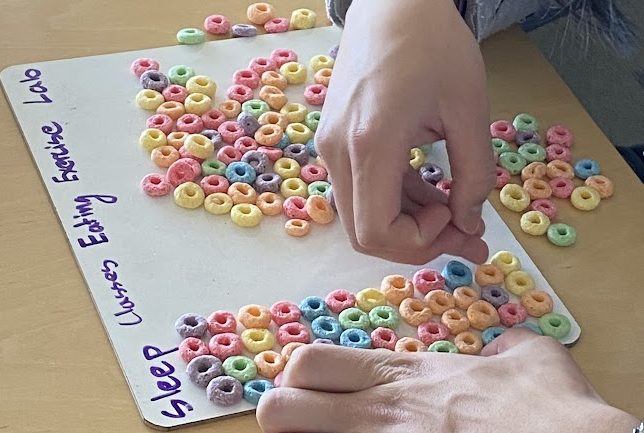
In my class, I have students organize their weekly use of time. The first step is to have them estimate how many hours are there in a week. When I ask that, I get responses that go from some 50 to 400 (it’s 168). Then, they need to estimate how much time they dedicate to sleeping, eating, going from place to place, being in class and so on. Some estimate about 5 hours a week for eating, which is impossible if we think about standing in line to order food, waiting for our meal, paying, sitting down… seven days a week, three times a day (granted, many only eat once a day, but still). This activity is a big picture view of how we use our time.
For them to know how long it takes them to write an essay, or answer a chemistry problem set, is also difficult, and they would need to objectively measure the time to get an average that they can then use when planning their study or academic work time. I am aware this all sounds like an overkill, but when you are taking 4-5 rigorous courses, are member of 3 student organizations, involved in research, and do volunteering on the side, every minute counts.
So for me estimating how long it takes me to do something is hard. It’s even harder to estimate how long it will take someone else to do the same thing. At some point, I was asked to determine how much time an administrative assistant needed to work on tasks related to my position; the person was supporting several colleagues and me. It was difficult. I was first estimating how long it took me but then I adjusted to how long it would take someone else, who was not as familiar with the task or was not quite as fast typing or using excel or whatever as I am. In the end, I doubled the time I estimated for myself and turned out to be about right.
As instructors, how do we estimate the time it takes our students to perform a task? Especially for undergrads in first or second year? What is reasonable for an exam? We assume, but are we right? If we grade students based on speed, what are we evaluating? Is speed relevant to the real world tasks the student will be performing in their professional life? Wouldn’t we want to ensure accuracy, knowing that the speed will come with practice, as dexterity sets in, or the formula is more salient in their memory?
For many exams, students have about 1 minute to answer each question. Responses in a multiple choice are meant to be tricky to ensure the person really understands or is familiar with nuances of the topic. And there are multiple unrelated situations that create obstacles. For example, a student whose first language is not English told me that in exams they need to first translate the question to their native language (in their mind), then figure out the answer still in that language, and then translate it back to English. Another person told me they need to translate words into pictures and once they have the visual answer, translate it into words. For non-English native speakers, an idiom may present a barrier, for an autistic person the barrier may be figurative language or implied meanings. All of these are a examples of different ways of processing information, NOT a reflection of their true understanding, skills or knowledge.
A better way to assess students’ learning is, in my view, making sure that our questions are clear, first of all, and then giving people enough time to work their way to a solution, and express their thoughts. Students would do better and we would not be as frustrated. Dealing with our time constrains is a logistics, not an educational, question.
Another important aspect is to help them learn from their mistakes, by letting them improve their essays, try again to solve that linear algebra problem… real life rarely presents “do it right the first time or else” situations. But that’s a topic for another day.
(originally published as an article in LinkedIn, December 21, 2025.)
 Florencia Ardon