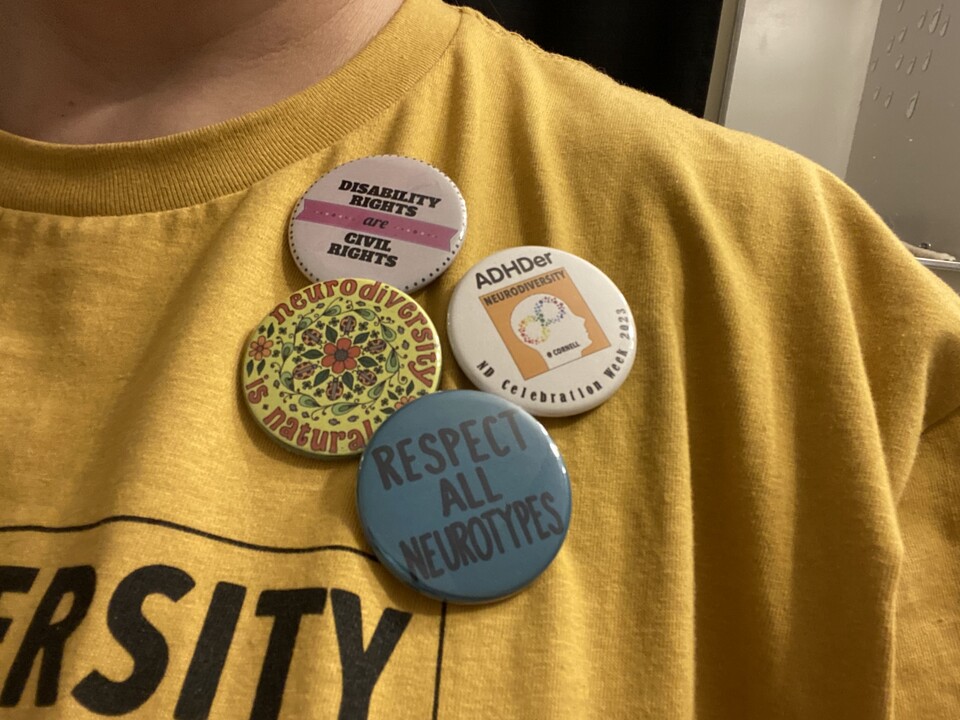
A Cornell alumni, at the time President of the Disability Awareness Union, mentioned once “Real inclusion is not to be accepted. Real inclusion is to be expected.”
Often, thinking about my teaching, I ask myself–is this accepting, or expecting?
An example of the difference would be: I’m hosting a dinner party and when my friends arrive, one of them mentions being vegan. I scramble rapidly to find something vegan in my pantry and offer her whatever vegetables are at hand. I accepted her. I did not make fun of her or force her to eat any meat or dairy. But I did not expect her.
Expecting her would mean to have her in mind as I plan the evening. I can make sure the wine I offer is vegan (some wines are not, as they’re clarified using egg yolk), not to have the meal revolve around animal products and have similar quality in the vegan and non-vegan food I offer. Meaning–I cannot have a feast for all non-vegan friends and then a couple of apples for my vegan friend (similar things happen all the time with all types of sensory or dietary restrictions and preferences, by the by). If my friend is really bothered by others eating animal products, then I could offer a vegan dinner.
What does it look like in my office or in my classroom? It can mean having Zoom ready to go, if a student cannot come to class and wants to join remotely, or offering zoom advising or “office hours” meetings for all students. Or better yet, having all classes streamed and recorded. (I don’t, by the way, as my class is discussion-based, which by nature cannot be replicated by simply watching).
It is having captions in all my PowerPoint presentations, and on Zoom. It is allowing students to move around, to eat, to doodle or fidget in class or in my office. It is stating my commitment to their religious, psychological, athletic, academic accommodations and asking them in advance, instead of waiting for them to take the initiative of telling me. (For students, having to tell each and every one of the faculty and staff they interact with the accommodations they need is onerous and depends on “good” executive function skills; additionally, they risk the faculty member engaging in micro-aggressive behavior).
It is having a clear syllabus and a well-structured curriculum, where class expectations, students’ responsibilities and rights are well articulated. It is making it easy to navigate my CANVAS site. And not changing the syllabus or curriculum midterm without consulting students.
It is, basically, having a good dose of humility and accepting that we can improve based on students’ feedback and paying attention to their needs. It is knowing they know best what helps them and that I cannot impose my ideas. In many ways, it is based on good customer service. They don’t owe me anything. I teach and advise and support thanks to them. Students are the reason I have a job.
We can improve, day by day. We can create real inclusion, and everyone will benefit.
 Florencia Ardon